Tag: "africa"
New Clues to Our Ancestors' Mobility
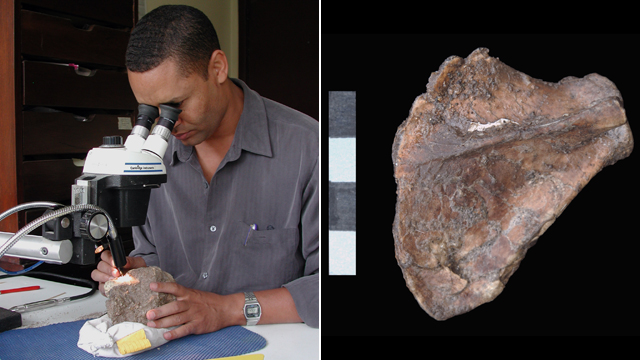
Australopithecus afarensis (the species of the well-known “Lucy” skeleton) was an upright walking species, but the question of whether it also spent much of its time in trees has been hotly debated for 30+ years, partly because a complete set of A. afarensis shoulder blades has never before been available for study.
Post on Nov 05, 2012 by Helen Taylor from QUEST Northern California
Divining Human History with DNA
Everyone knows about how genetics is changing how we look at and treat human disease. But what may be less appreciated is what it can tell us about human history.
Post on Apr 16, 2012 by Dr. Barry Starr from QUEST Northern California
Holistic Help for Hornbills
They're handsome, they're huge, they mate for life and they are endangered.
Post on Jun 03, 2009 by Amy Gotliffe
Predators in Peril in Uganda
Last October, I gazed out at the expanse of Queen Elizabeth Park, in Uganda, close to the comfy Mweya Safari Lodge where we were staying. The landscape was beautiful, peaceful…and kind of empty. Though we had seen a large and lovely herd of elephants the evening before, on this fine, clear morning, the habitat was clearly missing one of the most important parts of the eco-system: predators. All we could find were tracks.
Post on Apr 08, 2009 by Amy Gotliffe
Quest Picks: Talking Elephants at the Oakland Zoo
Can elephants feel seismic waves? Scientists have known for years that elephants can communicate. By using low frequency vocals, called rumbles, elephants can 'talk' with eachother, sometimes communicating from very long distances. But the new question being asked by some scientists is: can elephants feel those rumbles in the earth? Biologist Dr. Caitlin O'Connell-Rodwell from [...]
Post on Jul 11, 2008 by Shuka Kalantari
Wire Snares in Africa
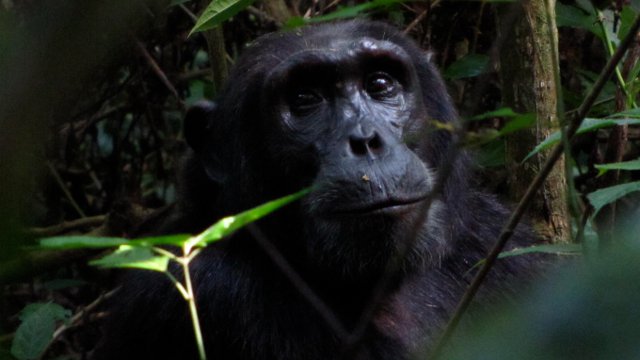
Photo by: Melissa Batson And how they put a snare in the plan for chimps and humans to live together. In the Budongo Forests of Uganda, a large group of Chimpanzees, named by researchers The Sonso Group, attempt to thrive in their natural habitat, eating plants and small prey. At the same time, humans who [...]
Post on Jul 03, 2008 by Amy Gotliffe